Buyer guide
What Goes Into an All-in-One Makeup Kit: Line-Ups That Sell
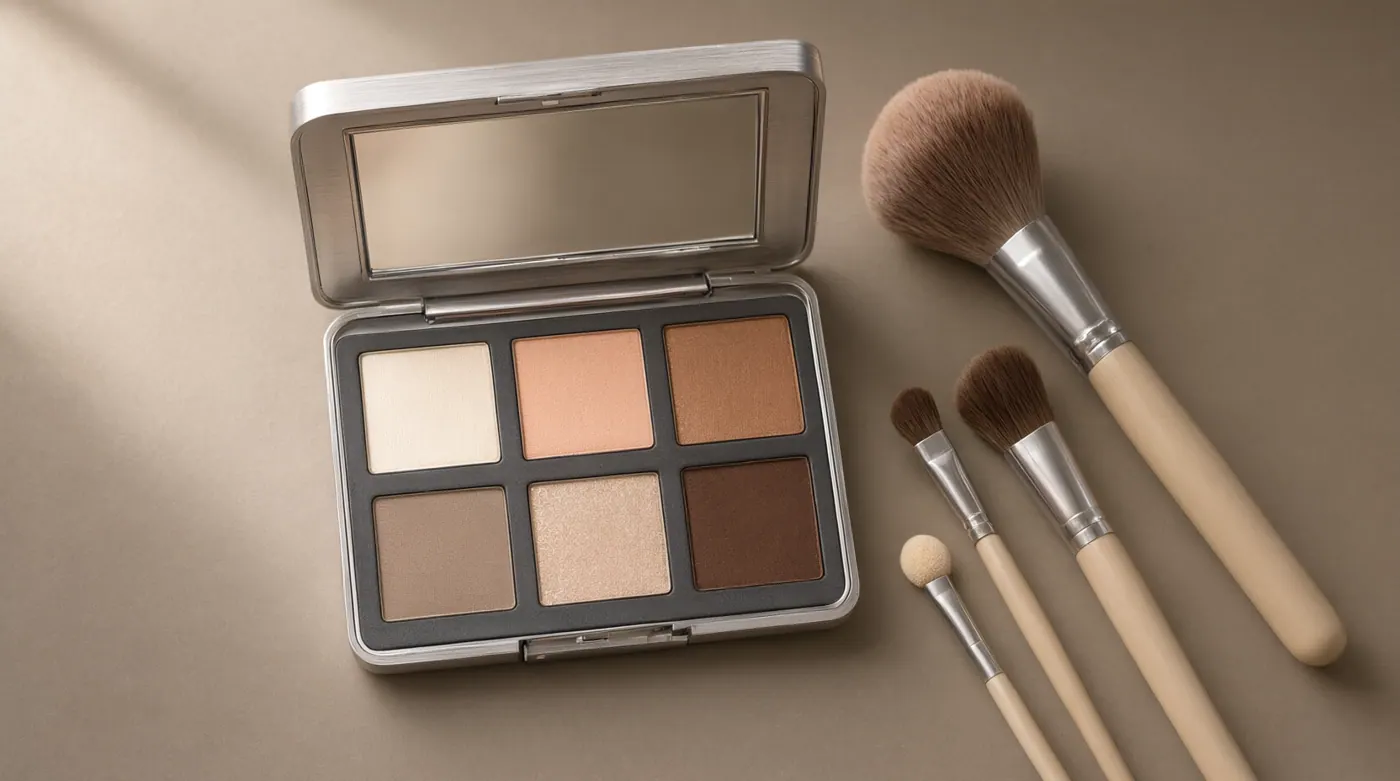
Packaging can wait. First, decide what the all-in-one makeup kit is for. Who buys it? Where does it sit? Start with the tier, the buyer and the shelf. Then choose the eyeshadow count. Get that order wrong, and you'll end up with a gorgeous case that never earns a reorder. We build these kits every week at Magic Color (Jinhua Magic Color Cosmetic Co., Ltd.), a makeup kit manufacturer in Jinhua, Zhejiang. What sells follows a fairly steady pattern.
Build the line-up by tier, not by gut feel
A kit range stalls for a simple reason: three SKUs, three people, three different days. Use a tighter rule instead. One shade story. Three price points. One obvious upgrade path.
| Tier | Typical build | Set MOQ | Where it sells |
|---|---|---|---|
| Entry / impulse | Printed paper sleeve or folding box. Compact pan count. One or two lip items. Acrylic mirror or none. Two to three brushes. | From 3,000 sets (standard process) | Endcaps, seasonal gifting, checkout |
| Mid | Rigid plastic case with mirror. Face and eye pans. Brush plus applicators. | From 6,000 sets (special process) | Department store gifting, teen beauty, e-commerce bundles |
| Premium | Aluminium case. Larger pans. Higher shade count. Brush set. | From 3,000 sets (standard process) | Beauty retail, professional makeup kit buyers, corporate gifting |
Two things break this pattern. Shade drift is one. The entry kit runs warm coral; the premium one goes cool berry. On shelf, they stop looking related. Fix the shade card before you touch the packaging. The other? A premium case wrapped around an entry-level formula. Buyers notice. So do their customers.
Price breaks sit at 12k, 30k, 50k and 100k units. The tier you pick should already assume a volume. A 3,000-set standard-process run is not the same product as a 50,000-set programme — even when the pans are identical. Single items outside kits start at 6,000 pcs. Need special processes such as electroplating, 3D printing, silk-screen or embossing? Then the start is 12,000 pcs.
Powder quality: what 2500 mesh actually changes
Our pressed powders are micronised to 2500 mesh, then pressed at high pressure with a compliant binder system. Less glamorous than it sounds, right? That step separates a kit that feels expensive from one that feels like a toy.
Finer powder means smoother payoff and less fallout on the cheek. Drop a case in a warehouse, or knock it around in a shopping bag, and the high-pressure press helps keep the pan from cracking. Chalky, dusty powder kills a kit at the second purchase. No insert design rescues it.
Ask for the boring evidence, not the swatch photos. We run pan retention, drop and simulated transport tests on samples. Need third-party reports from SGS, Intertek or CTI? They're available per batch on request.
Shade balance in a full face makeup kit
Think of a full face makeup kit as four jobs: base, cheeks, eyes, lips. Count jobs, not pans. Ten eyeshadows and no usable brow shade? That kit gets used twice, then forgotten in a drawer.
- One neutral matte that doubles as brow powder on the lightest and the deepest tone in your market.
- Two blushes that are actually two colours — not the same pink twice.
- At least one lip in a different texture. Put a gloss beside two mattes and the kit reads fuller than three mattes.
- A highlighter that flatters, not frosts. For deeper tones, finer shimmer usually does more than extra pigment.
If you ship to several markets, don't average the shade card. Same shell, two shade cards: you get regional relevance without a second tooling bill. Pantone shade matching is held to a colour difference within ±2 ΔE, and we publish an annual shade card you can build a season around.
Kids and teens are a different brief. Macaron and pastel families, softer pigment loads, peel-off water-based nail polish instead of solvent. MissYoung, our own brand since 2015 and registered in 100+ countries, runs more than 50 sets on exactly that logic — have a look at the MissYoung range before you brief a teen kit.
Insert design is where kits quietly fail
The tray holds every pan, the mirror, the brushes and the applicators, and it takes the shock of every drop. Insert tooling is where cheap kits hide.
We test mirror adhesive strength, pan fit, eyeshadow case opening force, tube air-tightness, label adhesion, plastic part separation force and metal salt spray, plus drop and simulated transport on the finished sample. Those tests are unglamorous and they are the reason a kit survives a container, a distribution centre and a customer's handbag.
Empty space is a design flaw, not a premium signal. A tray with cavities that fit the components properly looks tighter and reads as better value. On materials, PP, PET and PS trays and paperboard options — including recycled board — behave differently on cost and on end-of-life messaging. Decide which one you're selling before the tooling is cut.
Mirror and brushes: the first things cut, the first things noticed
Blunt opinion: a mirror that arrives loose, or fogged with adhesive haze, ends the relationship faster than a mediocre eyeshadow. Size it to the lid and to actual use — a mirror you can't see your whole eye in is a decoration.
Brushes are the other place buyers cut corners. Three decent brushes beat seven that shed. We use synthetic fibre only, no animal hair, with non-latex puffs and applicators matched to the formulas in the tray. If a brush sheds on first use, the whole kit feels cheap — no matter what the powder cost.
Compliance labelling when one box holds six products
Most kit projects underestimate this part. A kit is not one cosmetic product. It is several products packed together. Under Regulation (EC) No 1223/2009, each formulation carries its own ingredient list in INCI order, nominal content, batch code, period-after-opening or best-before date, responsible person name and address, and any required warnings — in the language of the market.
The US is not simpler. FDA cosmetics labelling rules require an ingredient declaration, net quantity and the name and address of the responsible firm. MoCRA added registration and listing duties on top. Note the wording: FDA and MoCRA requirements. No one hands you a certificate that says a kit is approved — that is not how it works. What you get is a label that matches the rules, plus a file that backs it up.
The back panel is usually where it jams. Group ingredient lists per product, and map them clearly to the tray. A shopper should be able to tell which list belongs to which pan. Don't shrink the type to make it fit — redesign the panel. Then localise: Arabic, French, Spanish, Russian, whatever your retail partner asks for. We have run Russian Data Matrix (Честный ЗНАК) coding on the lines since October 2025, which matters if that market is on your roadmap.
Children's kits add another layer. EN-71 and CE questions come up early, and our kids items are produced to EN-71 and CE requirements with skin irritation and oral non-toxicity testing. We also keep a live compliance database across the EU, US, South America, Middle East and Southeast Asia, so your label review isn't a guess.
Sampling a kit without wasting a season
Samples take 3–7 days and are free — you cover freight — with two free revisions. Formula development runs 14 days standard or 7 express. Production is 45 days standard, 30 express. Those numbers set your launch calendar.
Use the sample properly. Wear the powders for a full day on more than one skin tone. Drop the closed case from waist height onto tile. Open and close it twenty times. Brush the brushes against a dark cloth and look for shedding. Hand the back panel to a native speaker of the target language and ask what's confusing. Then send one unit through your own fulfilment centre as a test order. If something is going to break, you want it to break in your office, not in a store.
Think in families, not one-offs
Three tiers. One shade story. One insert language. One labelling system. That is a range — and a range is what gets you shelf space and repeat orders. Kit capacity today runs at 300,000 sets a month. A new facility of about 100,000 m² with 45 lines, due to open in 2027, is planned to add capacity on top of that.
Start with the tier and the buyer. Everything after that is engineering. Browse our makeup kits, compare formats in makeup gift sets, look at custom packaging options, or send us your brief and we'll come back with a line-up and a quotation — valid 30 days.
FAQ
What is a realistic MOQ for a custom all-in-one makeup kit?
For sets, standard processes start at 3,000 sets — that covers standard cases, sleeves, bags and gift boxes. Special processes start at 6,000 sets. Individual components outside a kit start at 6,000 pcs. Need electroplating, 3D printing, silk-screen, embossing or a custom mould? Then it's 12,000 pcs. Price breaks sit at 12k, 30k, 50k and 100k units.
How long do sampling and production take?
Samples take 3–7 days and are free — you pay freight — with two free revisions. Formula development takes 14 days standard, 7 days express. Production runs 45 days from order confirmation to ex-works, including in-line testing. On an express schedule, that drops to 30 days.
Can a single label cover every product inside a multi-product kit?
No. Each formulation needs its own ingredient list, nominal content, batch code, PAO or best-before date and responsible person details — in the language of the market. Regulation (EC) No 1223/2009 works that way. US FDA and MoCRA requirements add their own labelling, registration and listing duties. The practical answer? A back panel that groups the lists per product and maps them to the tray.
What powder quality should I ask for in a professional makeup kit?
Specify micronising to 2500 mesh plus high-pressure pressing with a compliant binder. You get smoother payoff, less fallout and better pan retention in transit. Ask for drop, simulated transport and pan-retention results on the sample. If your retailer needs them, request third-party reports from SGS, Intertek or CTI per batch.